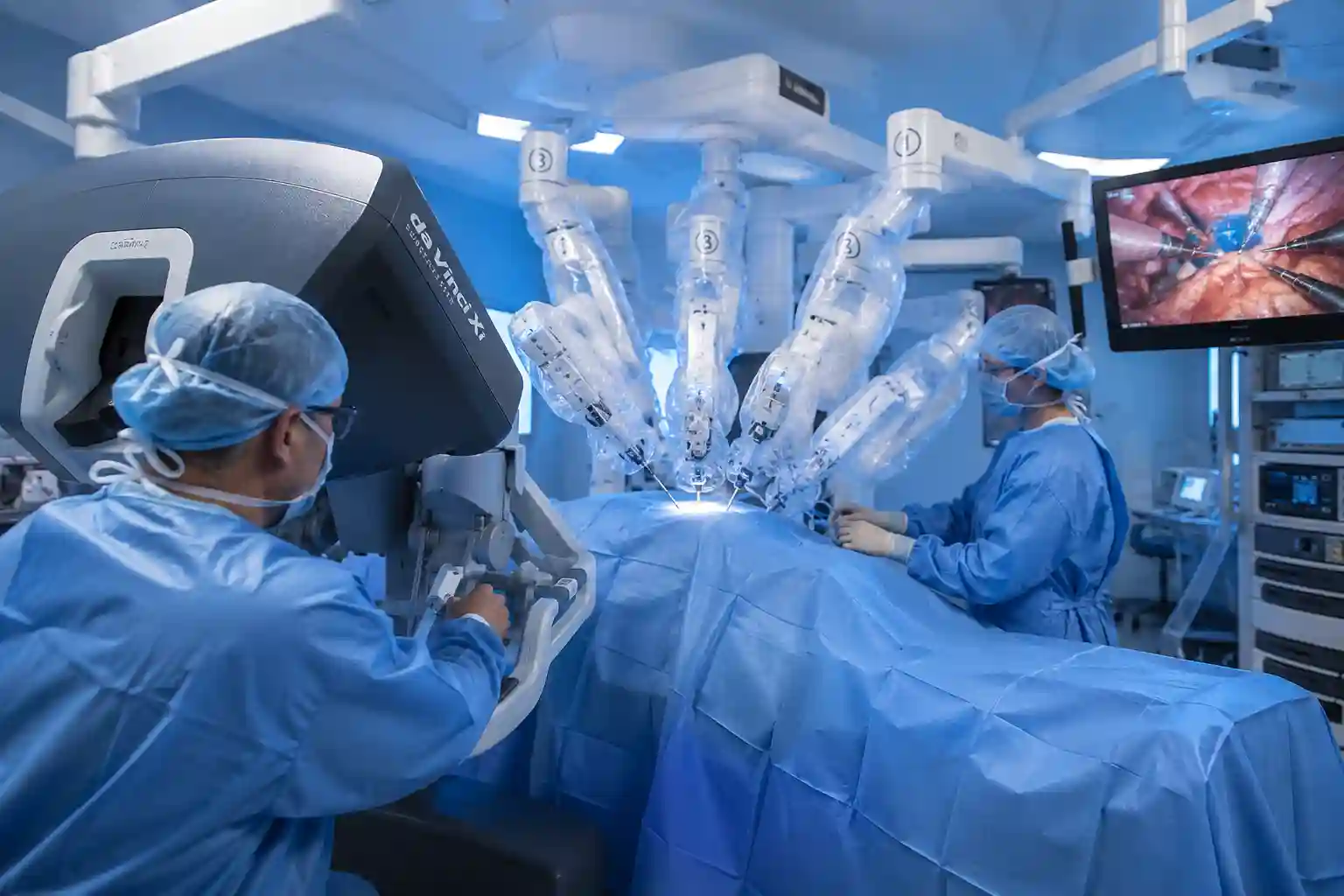
Advanced Bladder Care & Robotic Surgery
Dealing with a diagnosis related to the urinary bladder can be one of the most stressful times for a person and their family. Whether you are searching for a urologist near me in Dubai or seeking a second opinion from a world-renowned urologist, understanding your surgical options is the first step toward recovery. This comprehensive guide explores everything you need to know about Robotic Cystectomy, a revolutionary procedure changing lives in the UAE.
1. What is Robotic Cystectomy?
A robotic cystectomy, or robot-assisted cystectomy (RAC), is a highly advanced, minimally invasive surgical procedure used to remove part (Partial) or all (Radical) of the urinary bladder.
- Differences from Traditional Surgery: Unlike traditional “open” surgery, which requires a large incision in the abdomen, robotic surgery uses several small, keyhole incisions.
- How it Works: During the procedure, the surgeon operates from a console, using high-tech robotic arms that hold specialized instruments. These instruments possess a greater range of motion than the human hand, allowing for incredible precision in the tight spaces of the pelvis.
Did you know? Robotic cystectomies are rapidly becoming the gold standard. Studies show that the use of this technology grew from 22% of all bladder removals in 2010 to over 40% by 2015, and those numbers continue to climb as technology improves.
2. When is this Surgery Necessary?
The primary reason a patient is recommended for a radical cystectomy is Bladder Cancer that has invaded the muscle wall of the bladder. However, it may also be used for:
- Congenital Anomalies: Conditions present from birth that affect how the urinary system functions.
- Severe Bladder Dysfunction: When the bladder no longer functions correctly due to neurological conditions or chronic inflammation.
- Cancer Prevention: In rare cases of high-risk recurrent non-muscle invasive cancer.
3. Meet Your Specialist: The Best Urologist in Dubai
Dr. H Sanjay Bhat
Senior Consultant Urologist – Al Zahra Hospital Dubai
If you are looking for an Indian urologist with a global reputation, Dr. H Sanjay Bhat is a pioneer in the field of advanced urological laparoscopy and robotic surgery. He is widely recognized for his skill in handling complex reconstructive cases.
Clinical Excellence:
- Credits for the largest series of laparoscopic adrenalectomies in India.
- Pioneer in laparoscopic live-related kidney retrieval for transplants.
- Expert in Endourology, Paediatric, and Reconstructive Urology.
- Lead specialist at Al Zahra Hospital, Al Barsha, featuring state-of-the-art robotic suites.
4. The Robotic Advantage: Is a Robot Performing the Surgery?
A common misconception is that a robot “performs” the surgery autonomously. This is not true. The surgeon is in 100% control at every microsecond. The robot acts as an extension of the surgeon’s hands, providing:
- 3D High-Definition Vision: The surgeon sees the anatomy magnified 10x in high definition.
- Tremor Filtration: The system removes tiny natural hand tremors for extreme steadiness.
- Endowrist Technology: The robotic instruments can rotate in ways the human wrist cannot, making it easier to stitch and remove tissue in deep pelvic areas.
5. What Happens During the Procedure?
The surgery typically takes about 6 hours. Here is a simplified breakdown of the steps:
- Anesthesia: You will be under general anesthesia (deep sleep).
- Insufflation: The abdomen is filled with CO2 gas to create a “room” for the surgeon to work in.
- Incisions: 4-5 tiny incisions (8-12mm) are made to insert the camera and tools.
- Removal: The bladder and lymph nodes are carefully detached and removed through a slightly larger keyhole.
- In males: This may include the prostate and seminal vesicles.
- In females: This may include the uterus, ovaries, and part of the vaginal wall.
- Reconstruction: The most critical part—rebuilding how you pee.
6. Urinary Reconstruction: Life After Bladder Removal
Since the bladder is removed, the surgeon must create a new way for urine to leave the body.
| Method | How it Works | Key Advantage |
| Ileal Conduit | A piece of the small intestine connects the ureters to a “stoma” (opening) on the skin. Urine drains into a bag. | Simplest surgery, fastest recovery time. |
| Neobladder | A “new bladder” is made from the intestine and sewn to the urethra. You pee naturally. | No external bags; most natural body image. |
| Continent Reservoir | An internal pouch is made. You empty it by inserting a small tube (catheter) into a hidden stoma. | No external bag, but requires manual emptying. |
7. Why Indian Patients Choose Robotic Surgery in Dubai
For the Indian community and expats in Dubai, robotic surgery offers a bridge between high-quality medical care and cultural comfort. Many prefer an Indian urologist like Dr. Bhat because of the shared language, cultural understanding, and high-volume surgical experience common in Indian clinical backgrounds.
Benefits over Open Surgery:
- Lower Risk of Infection: Small incisions mean less exposure.
- Less Blood Loss: Often avoids the need for blood transfusions.
- Pain Management: Patients require significantly fewer opioids (narcotic painkillers) after robotic surgery.
- Shorter Hospital Stay: Usually 3-5 days compared to 7-10 days for open surgery.
8. Preparing for Your Surgery
Preparation is key to a successful outcome. When you visit your urologist near me, they will guide you through:
- Medical Review: Discussing blood thinners (Aspirin, etc.) which must be stopped.
- Nutritional Support: Ensuring your body is strong enough for the 6-hour procedure.
- Bowel Prep: Since intestines are used for reconstruction, you may need a special diet or “cleansing” a day before.
- Pre-habilitation: Light walking and breathing exercises to strengthen the lungs.
9. The Recovery Timeline
Recovery happens in stages. At Al Zahra Hospital Dubai, we focus on “Enhanced Recovery After Surgery” (ERAS) protocols.
The First Week (In Hospital): The medical team will focus on “waking up” your bowels. Since the intestine was handled during surgery, it takes a few days to start moving again. You will be encouraged to walk the hallways within 24 hours of surgery to prevent blood clots.
Weeks 2 to 6 (At Home):
- Appetite: It is normal to have a poor appetite and irregular bowel movements initially.
- Activity: No heavy lifting (nothing heavier than a kettle). Light walking is encouraged.
- Wound Care: Small incisions heal quickly, usually within 10-14 days.
10. Side Effects and Considerations
As with any major surgery, there are risks and long-term changes:
- Sexual Function: In men, removing the prostate can lead to erectile dysfunction. In women, vaginal shortening may make intercourse different. Dr. Bhat uses “nerve-sparing” techniques whenever oncologically safe to preserve function.
- Urinary Changes: If you have a Neobladder, you will have to “re-learn” how to pee using your abdominal muscles.
- Lymphedema: Occasionally, removing lymph nodes can cause swelling in the legs.
11. Why Al Zahra Hospital Dubai?
Choosing the right venue for such a complex surgery is as important as choosing the surgeon. Al Zahra Hospital Dubai in Al Barsha is a leader in tertiary care:
- Advanced Robotics: Equipped with the latest robotic platforms for urological surgery.
- Comprehensive ICU: One of the largest and most advanced ICUs in Dubai for post-op monitoring.
- Multidisciplinary Team: Urologists work with oncologists, radiologists, and specialized nurses to provide 360-degree care.
| Metric | Detail |
| Average Surgery Time | 6 Hours |
| Hospital Stay | 3-5 Days |
| Precision Rate | 95%+ |
12. Frequently Asked Questions
How soon can I travel back to India after surgery? Generally, we recommend staying in Dubai for at least 3-4 weeks after discharge to ensure the reconstruction is healing perfectly before a long flight.
Are there alternatives to bladder removal? In some early cases, TURBT (scraping), chemotherapy, or radiation can work. However, if the cancer is muscle-invasive, a cystectomy is usually the safest way to ensure the cancer is gone.
Conclusion
A robotic cystectomy is more than just a technological marvel; it is a gateway to a cancer-free life with a faster return to normalcy. With the expertise of an Indian urologist like Dr. H Sanjay Bhat and the world-class facilities at Al Zahra Hospital, patients in Dubai no longer need to travel abroad for the best medical care.
If you or a family member are facing bladder issues, don’t wait. Search for the best urologist in Dubai and book a consultation today. Early intervention saves lives.